
The first five months of 2023 have witnessed at least six major events/trends that augur badly for global economic and socio-political prospects, points out Shankar Acharya, former chief economic adviser to the Government of India.

Manisha Sharma (name changed) was always among the high achievers in her company. She was recognised and rewarded for those efforts as well. Mid-December 2022, however, she received a jolt: an email informing her that she had been laid off - along with several of her colleagues. Sharma worked for a big tech firm, which had decided to downsize. And just like that, she was asked to go. "It did come as a shock," she says. "I did not take calls for the first two days, but then realised there is no point in beating oneself up for a situation that's not in your hand. "I thought let this be an opportunity to take a break. I'll now start looking for a job," she adds.

Embracing the habit of SIPs can pave the way for a financially secure and prosperous future, points out Misbah Baxamusa.

The challenge is to enhance opportunities for people to generate livelihoods through entrepreneurship, both big and small, argues R Jagannathan.

7 key areas that the Budget must address to re-energise the infrastructure sector, suggests Vinayak Chatterjee.

'We remain positive on technology, private sector financials, gas, infrastructure, and export-oriented plays.'

Demonetisation of the high value currency notes of Rs 500 and Rs 1,000 did not have any discernible impact on currency in circulation (CIC) in the country, which has soared by almost 83 per cent since its announcement on November 8, 2016. The Supreme Court on Monday upheld the decision of the government on demonetisation. On November 8, 2016 Prime Minister Narendra Modi had announced demonetisation of old Rs 1,000 and Rs 500 banknotes and one of the key objectives of the unprecedented decision was to promote digital payments and curb black money flows.

PEs and VCs are taking a closer look at their bouquet of investments. Leading voices in the sector are categorical that cash-burn rates -- that's blowing up equity to acquire market share -- as a business model can't continue to be the polestar.

Chief Economic Advisor (CEA) V Anantha Nageswaran on Tuesday said India is not defending the rupee and the Reserve Bank of India is taking necessary steps to ensure that the movement of the rupee is gradual and in line with market trends. Nageswaran further said that the rupee is being managed in a manner that reflects the fundamentals of the economy. "India is not defending the rupee... I don't think Indian fundamentals are such that we need to defend the rupee. "The rupee can take care of itself," he said at an event in New Delhi.

"What would be your advice for investors?" 'Keep it simple. Don't panic.'

"We will raise Rs 300 crore via bonds of two-, three- and five-year tenures. This will be our maiden bond issuance and is part of our effort to widen funding sources," says Vimal Bhandari, executive vice-chairman and chief executive officer (CEO), Arka Fincap. The firm, a subsidiary of Kirloskar Oil, is only five years old and small (assets of around Rs 5,000 crore with an "AA" rating), but the response to this float will be closely watched: It would be the first by a non-banking finance company (NBFC) after Mint Road upped the risk weights on bank exposures to them by 25 percentage points. The move by the Reserve Bank of India (RBI) has caught NBFCs off guard even though the issue had been flagged by Governor Shaktikanta Das with their corner-room occupants (and that of banks) in July and August 2023 - on consumer credit and the dependency on bank borrowings.

Within six months, outlets carrying Vicks jumped from 60,000 pharmacies to 750,000 general stores. The trade boycott collapsed. Consumers were happy, finding Vicks now at every street corner. A fascinating excerpt from Gurcharan Das's Another Sort of Freedom.

Instead of getting confused by what agents tell you, check waiting period, claim-settlement ratio, price comparison etc to make the right choice.

rediffGURU Kanchan Rai, founder, Let Us Talk, offers advice on how to navigate problems in a relationship.

This is a key reason for the finance ministry's objection to fixing the tenure at 100 years, as it is pushing PSBs to be self-dependent and raise funds from the market, reports Hamsini Karthik.

Discussion has started between blank check companies in the US and Indian PEs on possible deals in certain key sectors.

India's economic growth is now 'extremely fragile' and needs all the support that it can get, as private consumption and capital investment are yet to pick up, RBI Monetary Policy Committee (MPC) member Jayanth R Varma said on Friday. Varma further said out of the four engines of growth for the economy, exports and government spending supported the Indian economy through the pandemic, but other engines need to pick up the baton now. " I like to think in terms of the four engines of growth for the economy: exports, government spending, capital investment and private consumption. "...while exports cannot be the main driver of growth because of the global slowdown, government spending is necessarily limited by fiscal constraints," he told PTI.
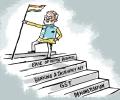
The report says, the emerging markets continue to have uneven performance but India recovers from decelerating growth. Narendra Modi government, it added, continues business-friendly growth reforms, the economy grows at 6 per cent and the market rises 20 per cent.

Or has the world seen things like this before, asks Ajit Balakrishnan.

The formula for success of farm economy is very simple -- farmers should be able to produce more from the same piece of land at reduced cost while minimising risk and be connected to market to get higher realisation for their produce, points out Siraj Chaudhry.

Shreekant Sambrani remembers P R S 'Biki' Oberoi, personal friend and hospitality icon, who passed into the ages this week.

'The Indian economy and the Indian financial sector today remain resilient and much better placed.'
Three-quarters into the 10 years that Mr Modi had sought for transforming India, the 'output' numbers look impressive, but the key 'outcome' numbers don't show up much, if at all, observes T N Ninan.

The Indian IT industry will stage a "strong recovery" in 2021-22 with a revenue growth of up to 11 per cent, ratings agency Crisil said on Wednesday. The recovery will be led by increasing outsourcing and accelerating digital transformation services mainly in sectors such as banking, financial services and insurance (BFSI), healthcare, retail and manufacturing, it said. As per Nasscom, the IT services industry grew 2.7 per cent to $99 billion in 2020-21.

And this is how you can highlight them at your next job interview.

Bolstered by bullish investor sentiments, India witnessed companies mopping up a whopping $9.7 billion through initial share sales in the first nine months of 2021, the highest amount for the nine-month period in two decades, says a report. As many as 72 initial public offerings (IPOs) hit the stock market during the January-September period this year in India and strong sentiments were visible in the global markets as well, according to leading consultancy EY. EY, in its latest report, said the global IPO market continued to boom through Q3 2021 resulting in the most active third quarter by deal numbers and proceeds in the last 20 years.

Jio's spectrum trading pact with Airtel has enabled India's largest telco to top-up its holding in three key circles and yielded potential savings of about $400 million, according to a report. It is pertinent to mention here that Reliance Jio has signed an agreement with Bharti Airtel to acquire a portion of spectrum in 800 MHz band for Andhra Pradesh, Delhi and Mumbai circles at an aggregate value of Rs 1,497 crore -- marking the first such deal between the two telecom giants that otherwise compete fiercely in the market. Market analysts have termed the deal "mutually beneficial" and "win-win for both". UBS in a note cited Jio's spectrum buys in the 800 MHz band in Andhra Pradesh, Delhi and Mumbai in the recently-concluded auctions.

Measures reportedly being mulled by the government to ease telecom industry's stress and fundraising may give Vodafone Idea the much-needed breather, but structural issue undermining the sector can be fixed only with "sizable" tariff hike for 4G prepaid customers, according to a note by Edelweiss. It further observed that as Voda Idea's large liabilities are falling due, and given the impending launch of JioPhone Next (whose rollout timeline has now been pushed to before Diwali), "the sooner the government measures as well as tariff hikes are rolled out, the better it is". It is pertinent to mention here that the telecom sector has been keenly watching out for the relief package, which could include redefinition of Adjusted Gross Revenue (AGR) to exclude non-telecom items, cut in levies such as Spectrum Usage Charges and easier terms and conditions for surrendering radiowaves to the government.

Indian society may be more advanced than we think it is, notes Ajit Balakrishnan.

The current up move, according to analysts, closely resembles the rally post the global financial crisis in 2008-09, not just in quantum and speed, but also the way small-and mid-cap indices outperformed large-cap peers.

In a move that is bound to spell relief for social media users, the government on Tuesday launched the much-awaited grievance appellate committee (GAC) mechanism that will allow users to appeal against decisions of social media platforms by filing their complaints on a new portal.

Ashok Kumar Gupta, chairman of the Competition Commission of India (CCI), has never minced words while talking about the giant technology companies, referring to them on multiple occasions as "centres for entrenched and unchecked dominance". The anti-trust regulator has, in fact, been cracking down on big technology companies such as Google, Apple, Facebook, and others, after they were hauled up by regulators and lawmakers in Europe and Australia. However, in several instances, existing regulations have prevented the CCI from going all out against these companies for anti-competitive activities.

When Open Network for Digital Commerce (ONDC) was conceived last December, the idea was to reduce the dominance of e-commerce giants like Amazon and Flipkart. It was also to bring in a level-playing field for small merchants in India's fragmented but fast-growing $1-trillion retail market. However, those goals have changed now as large e-commerce players such as Flipkart, Amazon and Ecom Express are in various levels of talks with the ONDC team. They want to form partnerships like integrating with the network as well as providing their expertise to build it, according to the industry sources.

'These new laws give complete (impunity) to the police.' 'Whatever little accountability the police had, all that is gone now.' 'There is no accountability mechanism against the police for abusing or misusing in the new laws.'
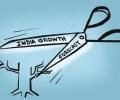
The International Monetary Fund (IMF), in its latest World Economic Outlook report, has slashed its forecast for India's FY23 gross domestic product growth to 8.2 per cent from 9 per cent, saying that higher commodity prices will weigh on private consumption and investment. This was one of the steepest cuts for emerging economies compared to the IMF's January WEO forecasts. Saying that global economic prospects have worsened significantly due to commodity price volatility and disruption of supply chains caused by the war in Europe, IMF cut its global growth outlook for calendar year 2022 to 3.6 per cent from 4.4 per cent, and said both Russia and Ukraine could experience large GDP contractions.

Private equity investments in proptech firms rose 35 per cent to $741 million last year as investors sought to tap huge opportunities amid rising use of technology in the realty sector, Housing.com said. Proptech firms that are providing solution in sales and marketing, and construction management got 69 per cent of the total funds. Inflow of funds into proptech firms stood at $551 million in 2020. Between 2009 and 2021, the proptech players in India received a total of $3.2 billion Private Equity(PE) investments.

Since when have elections become rocket science that you need to hire highly-priced specialists?And even if in the age of social media every party needs to present its best face, is Prashant Kishor the only one with such expertise, especially when his record is mixed with more losses than election wins to his credit? asks Virendra Kapoor.

'Then select those that are well-aligned with your risk-return profile and investment time horizon.'

'Investors should keep them on their radar and invest over a longer time frame, and expect some of these companies to bite the dust.'

The Supreme Court (SC) recently declared that a Hindu father or the manager of a Hindu Undivided Family (HUF) has the power to make a gift of ancestral property for a 'pious purpose', but such an alienation can't be permitted 'out of love and affection'. A petitioner had filed a suit against his father and another person called KC Laxmana for partition and separate possession of his one-third share in the property, and for a declaration that the gift or settlement deed executed by his father in favour of the second defendant, KC Laxmana, be declared null and void. Bharat Chugh, former judge and advocate, says, "The plaintiff argued that the property belonged to the joint family (of which Laxmana was not a part), and transfer of property without his consent was not valid." The SC ruled that gifting out of natural love and affection cannot be interpreted as 'pious purpose'.
